
Defending Frenemies: Alliances, Politics, and Nuclear Nonproliferation in US Foreign Policy
Authored by Jeffrey W. Taliaferro
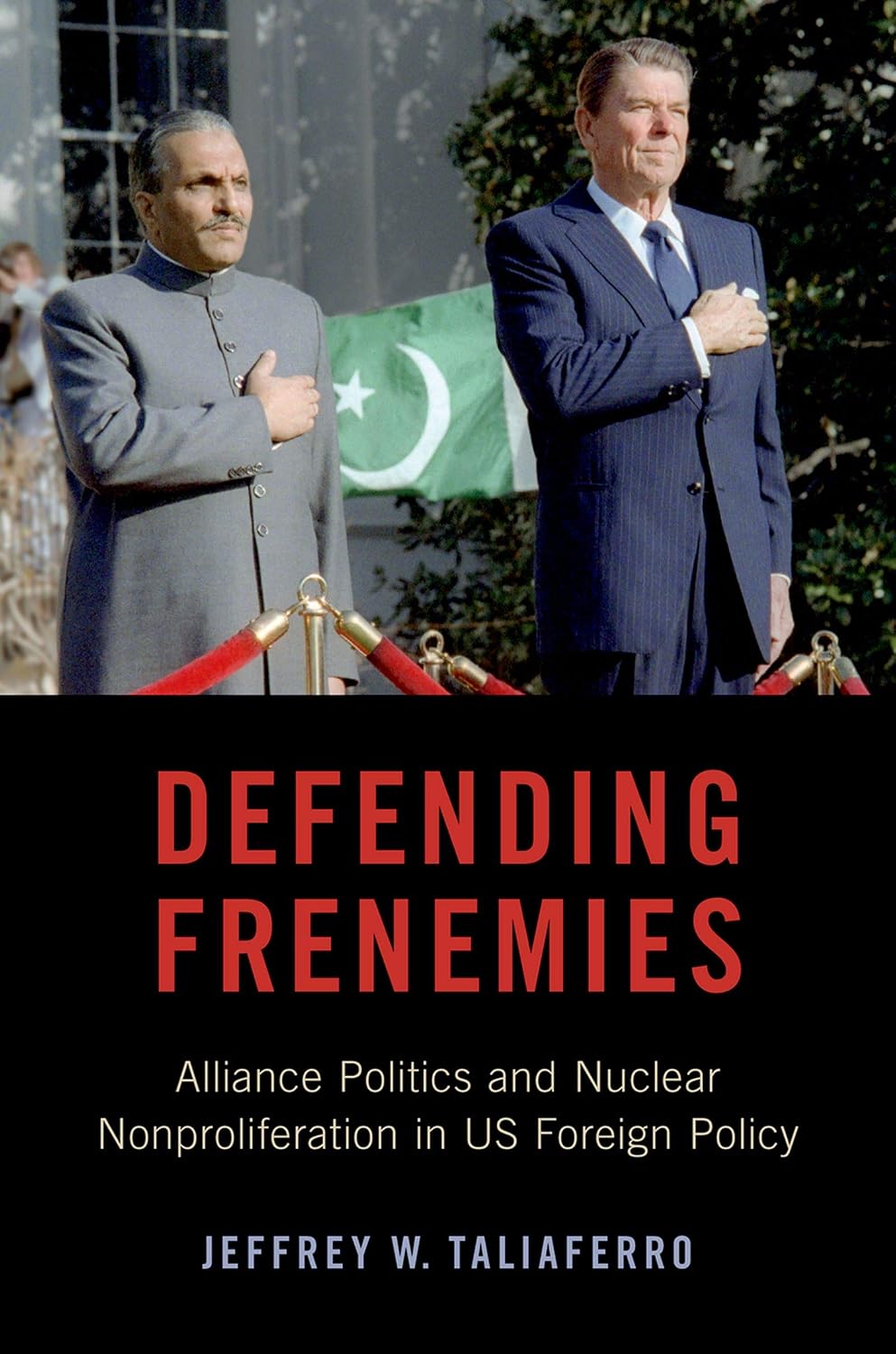
The United States maintains defense ties with as many as 60 countries, which not only enables its armed forces to maintain command globally and to project its force widely, but also enables its government to exert leverage over allies’ foreign policies and military strategies. In Defending Frenemies, Jeffrey W. Taliaferro presents a historical and comparative analysis of how successive US presidential administrations have employed inducements and coercive diplomacy toward Israel, Pakistan, South Korea, and Taiwan over nuclear proliferation.
Balancing Risks: Great Power Intervention in the Periphery (Cornell Studies in Security Affairs)
Authored by Jeffrey W. Taliaferro
Great powers often initiate risky military and diplomatic inventions in far-off, peripheral regions that pose no direct threat to them, risking direct confrontation with rivals in strategically inconsequential places. Why do powerful countries behave in a way that leads to entrapment in prolonged, expensive, and self-defeating conflicts?
Jeffrey W. Taliaferro suggests that such interventions are driven by the refusal of senior officials to accept losses in their state’s relative power, international status, or prestige. Instead of cutting their losses, leaders often continue to invest blood and money in failed excursions into the periphery. Their policies may seem to be driven by rational concerns about power and security, but Taliaferro deems them to be at odds with the master explanation of political realism.
Neoclassical Realist Theory of International Politics
Authored by Norrin M. Ripsman, Jeffrey W. Taliaferro, and Steven E. Lobell
Since Gideon Rose’s 1998 review article in the journal World Politics and especially following the release of Lobell, Ripsman, and Taliaferro’s 2009 edited volume Neoclassical Realism, the State, and Foreign Policy, neoclassical realism has emerged as major theoretical approach to the study of foreign policy on both sides of the Atlantic. Proponents of neoclassical realism claim that it is the logical extension of the Kenneth Waltz’s structural realism into the realm of foreign policy. In Neoclassical Realist Theory of International Relations, Norrin M. Ripsman, Jeffrey W. Taliaferro, and Steven E. Lobell argue that neoclassical realism is far more than an extension of Waltz’s structural realism or an effort to update the classical realism of Hans Morgenthau, E.H. Carr, and Henry Kissinger with the language of modern social science.
The Challenge of Grand Strategy: The Great Powers and the Broken Balance between the World Wars
Edited by Jeffrey W. Taliaferro, Norrin M. Ripsman, and Steven E. Lobell
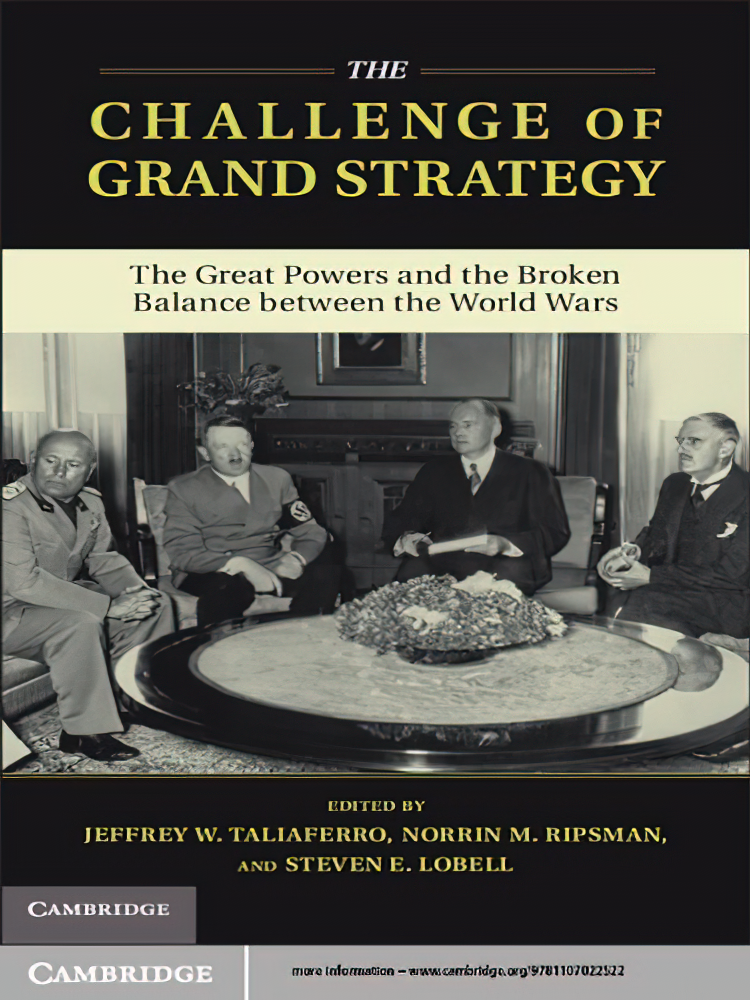
The years between the World Wars represent an era of broken balances: the retreat of the United States from global geopolitics, the weakening of Great Britain and France, Russian isolation following the 1917 Bolshevik Revolution, the resurgence of German power in Europe, and the rise of Japan in East Asia. All these factors complicated great-power politics. This book brings together historians and political scientists to revisit the conventional wisdom on the grand strategies pursued between the World Wars, drawing on theoretical innovations and new primary sources.
Neoclassical Realism, the State, and Foreign Policy
Edited by Steven E. Lobell, Norrin M. Ripsman, and Jeffrey W. Taliaferro
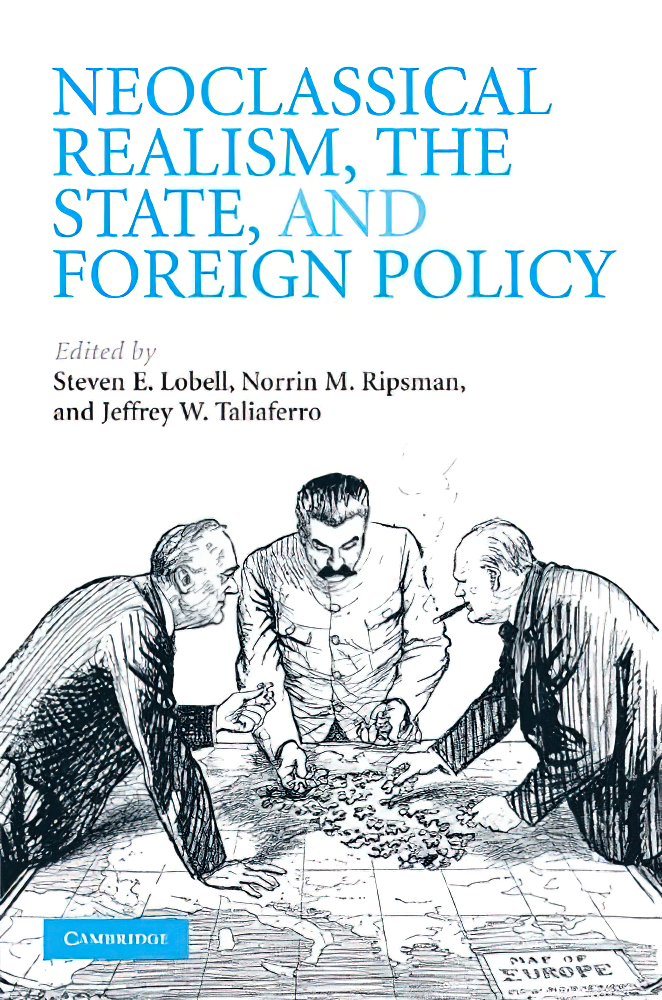
Neoclassical realism is an important approach to international relations. Focusing on the interaction of the international system and the internal dynamics of states, neoclassical realism seeks to explain the grand strategies of individual states as opposed to recurrent patterns of international outcomes. This book offers the first systematic survey of the neoclassical realist approach. The editors lead a group of senior and emerging scholars in presenting a variety of neoclassical realist approaches to states’ grand strategies. They examine the central role of the ‘state’ and seek to explain why, how, and under what conditions the internal characteristics of states intervene between their leaders’ assessments of international threats and opportunities, and the actual diplomatic, military, and foreign economic policies those leaders are likely to pursue.